UAE calls for unity of regional and international efforts to combat terrorism at Rhodes Conference for Security and Stability.
The UAE stressed that achieving security and peace in the Mediterranean region is the main factor for achieving stability in the world and represents one of the priorities of the UAE’s policy, which derives its principles from the United Nations, UN, Charter and the provisions of international law.
This came as part of the UAE’s statement in the Second Rhodes Conference for Security and Stability in the Mediterranean Region that was held upon the request of Greece, delivered by Ahmed Al Jarman, Assistant Minister of Foreign Affairs and International Cooperation for Legal Affairs.
Al Jarman reiterated the UAE’s condemnation of all forms of terrorism, regardless of its source, location and perpetrators, while stressing the importance of the unity of regional and international efforts to combat terrorism and activate relevant resolutions and recommendations issued by regional and international organisations, as well as reactivating the UN strategy to combat terrorism.
Al Jarman, who chaired the UAE delegation in the conference, spoke about the intensive efforts of the UAE to contain several regional and international crises.
He highlighted the UAE’s efforts to promote its various development, rescue and humanitarian programmes, as well as its efficient contributions in many peace keeping operations, refugee and civilian protection and rebuilding many locations after the end of conflicts.
"From this perspective, the UAE has expressed its concerns about the offensive and expansionist policies of Iran and highlighted its rejection of the continuing Iranian intervention in the internal affairs of Arab countries, while asking it to commit to fundamental principles based on good neighbourliness and respect for the sovereignty of countries, according to the United Nations Charter and international law," he said.
"The UAE highlighted its full commitment to the unity of Yemen and its respect for its sovereignty and independence as per the Gulf Initiative and its executive mechanisms, as well as for the outcomes of the Comprehensive National Dialogue Conference and the Riyadh conference and the full unconditional implementation of UN Security Council Resolution No. 2216 (2015). The UAE also supports the efforts of the UN Secretary-General’s Special Envoy to Yemen, Ismail Ould Cheikh Ahmed, and opposes any foreign intervention in the internal affairs of Yemen," he added.
Al Jarmen stressed the UAE’s desire to achieve the security, stability and unity of Libyan territories through reconciliation between the parties in the Libyan crisis, during a meeting that included Khalifa Haftar, Commander of the Libyan Army, and Fayez Al Sarraj, Head of the Presidential Council of the Libyan Government of Reconciliation, which was held in Abu Dhabi recently. He added that the UAE supports the efforts of the UN Secretary-General’s Special Envoy to Libya, Martin Kobler, to achieve security and stability in the countries facing the Mediterranean Sea.
He noted that combating terrorism must occur under a framework of commitment for international law, the rule of law and human rights protection, highlighting the necessity of fighting terrorism under united regional and international efforts while considering the roots and causes of this phenomenon.
The UAE recently hosted the International Conference for the Criminalisation of Cyber-Terrorism on 15th and 16th May, with the participation of a range of international academics, legal specialists, specialised experts, regional and International organisation and civil society organisations.
The conference issued the Abu Dhabi Declaration that included three main recommendations to adopt an international binding agreement that prohibits all forms of electronic terrorism, including recruitment and incitement, while calling upon countries to adopt the requirements of this binding agreement and include it in their national legislations, to issue a special law on electronic terrorism and establish national information and electronic security authorities to take charge of placing related policies and strategies under the framework of the rule of law, to monitor digital content that includes terrorist threats.
Al Jarman stressed that an international strategy must examine the nature of extremism that exceed national borders to become an international phenomenon, as well as the fact that extremist groups are using unsolved conflicts in the Middle East. "Under the framework of the importance of education in combating extremism, the UAE hosted the International Centre for Combating Violent Extremism, Hedayah, and established the Muslim Council of Elders ," he added.
He also highlighted the establishment of the Sawab Centre by the UAE, in co-operation with the United States, US, which aims to promote tolerance and combat extremist messages on social media.
Al Jarman stressed that the UAE is continuing to develop its national legislations to deter and eliminate all terrorist acts and prevent youth from being recruited by terrorists by adopting a federal law to combat terrorist crimes, which includes strict articles against those found guilty of committing or inciting terrorist crimes.
He stressed the desire of the UAE to promote the values of moderation, coexistence and tolerance, highlighting the establishment of a federal law to combat discrimination and hatred.
He noted that the refugee issue is increasingly deteriorating, forcing the international community to act efficiently in finding ways to stop its deterioration. He also called for the unity of efforts, especially as the critical regional and international situation requires greater international and regional co-ordination and co-operation.
He pointed out the fact that the UAE has provided humanitarian aid worth US$1.1 billion since the beginning of the Syrian crisis and established several projects to protect refugees in Jordan, Iraq and Lebanon. It has also co-operated with the Greek Government by signing a Memorandum of Understanding (MoU) to establish Syrian refugee camps in Greece.
Al Jarman stressed that the UAE will continue its foreign policies to achieve international peace and security, solve international conflicts through peaceful methods, respect international laws and adopt a comprehensive preventive strategy to prevent conflicts and achieve human security, economic prosperity and sustainable development.
Related News
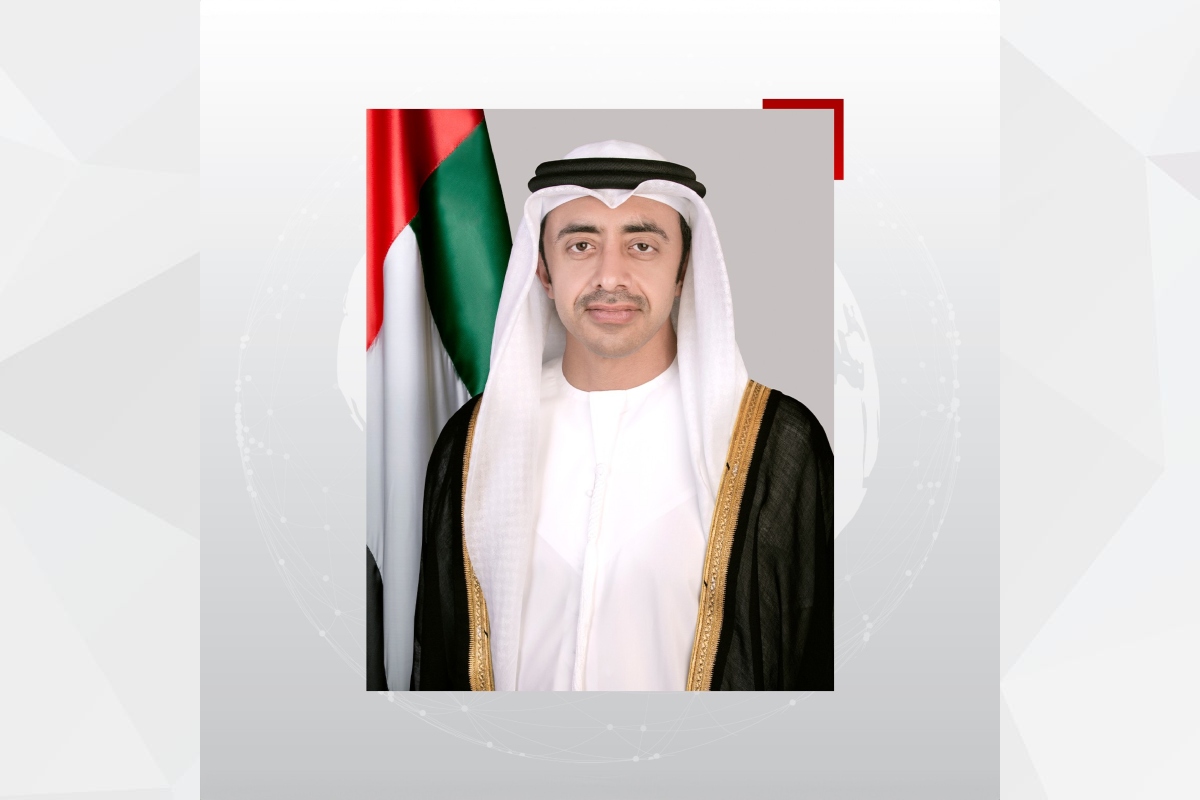
Abdullah bin Zayed holds phone calls with several foreign ministers to discuss regional developments
H.H. Sheikh Abdullah bin Zayed Al Nahyan, Deputy Prime Minister and Minister of Foreign Affairs, held phone calls with a number of foreign ministers to discuss the latest regional developments following Iran’s unprovoked and terrorist missile attacks targeting the UAE and several countries in the region and beyond.
View Details
Latest UAE Mediation Efforts Succeed with Exchange of 350 Captives Between Russia and Ukraine
The United Arab Emirates has announced the success of new mediation efforts between the Russian Federation and the Republic of Ukraine
View Details
Shakhboot bin Nahyan Participates in Indian Ocean Conference in Mauritius
Shakhboot bin Nahyan Al Nahyan: Using maritime routes as a tool of economic coercion or blackmail constitutes economic warfare, piracy, and unacceptable behavior
View Details
UAE, Indian foreign ministers discuss regional security
H.H. Sheikh Abdullah bin Zayed Al Nahyan, Deputy Prime Minister and Minister of Foreign Affairs, received Dr. Subrahmanyam Jaishankar, Minister of External Affairs of the Republic of India to discuss regional security
View Details