Joint Declaration on the occasion of the visit of the Chancellor of the Republic of Austria to the United Arab Emirates
On 7 May 2026, during a working visit to the United Arab Emirates (UAE), His Excellency Christian Stocker, the Federal Chancellor of Austria met the UAE President, His Highness Sheikh Mohamed bin Zayed Al Nahyan. Both sides held discussions and exchanged views on the latest international developments, regional security, and explored ways to enhance political, economic, humanitarian, and cultural cooperation between the two countries.
Both leaders underscored that relations between the UAE and Austria have witnessed significant progress in recent years. These relations are built on mutual trust, respect, shared interests, and a commitment to ensuring continued development and prosperity for the people of both countries.
This common purpose is underpinned by the understanding that both countries, as strong and trusting partners, are committed to promoting security, stability, and prosperity in their respective regions.
Both sides undertake to enhance the Comprehensive Strategic Partnership Agreement signed in 2021, with a view to adapting it to new developments and emerging fields, including Artificial Intelligence (AI).
Both countries reaffirmed their commitment to establishing a digital bridge, expanding exchanges in the field of Artificial Intelligence and other critical and emerging technologies, and fostering relevant industries in both countries on the basis of equality, reciprocity, and mutual benefit, based on the MoU on Cooperation in the Field of Artificial Intelligence concluded between both countries in 2024. Cooperation includes policy coordination on AI, identifying and supporting potential areas of collaboration, such as data centre development and research partnerships, enabling talent exchange and capacity building through education and training programs, and facilitating private sector partnerships and investments in AI and other critical and advanced technologies.
The two sides discussed expanding mutual investment and deepening economic cooperation, building on their roles as regional hubs and strategic gateways to affluent markets with strong growth potential. They noted the importance of fostering favourable conditions to further enhance the attractiveness of their business environments, with a view to sustaining and accelerating investments that support sustainable development and shared prosperity. They also reaffirmed their commitment to strengthening business ties and exchanges among small, medium and large enterprises in both countries through regular high-level meetings with representatives of the business community on both sides. The two sides welcomed continued cooperation, including through the upcoming Joint Economic Committee that will be held on the occasion of the 50th anniversary of the Agreement on Economic, Industrial and Technical Cooperation.
Both sides discussed exploring the establishment of the UAE-Austria Business Council as an enabling platform to further advance bilateral economic ties. The two sides expressed their support for and noted the progress in the negotiations on the UAE-EU Comprehensive Economic Partnership Agreement and that it will allow for deeper economic and trade cooperation between both sides.
Both leaders noted the strong collaboration between their countries in the energy sector, acknowledged the opportunities presented by developments in renewable energy, and expressed their intention to continue fostering cooperation within the framework of the Strategic Energy Security and Industrial Cooperation Partnership, and related initiatives, such as the Hydrogen Alliance established in March 2022. They also highlighted the role of private sector partnerships, including those involving ADNOC, Mubadala, OMV, and Borealis, in underpinning this cooperation, with a view to advancing collaboration across the energy value chain, including in finance, research and development of new technologies, as well as export and trade.
Both leaders also recognized the importance of advancing industrial cooperation as a key pillar of the bilateral relationship and highlighted the potential of Borouge Group International as a strategic platform to support long term, mutually beneficial growth, including through expanded collaboration in petrochemicals, advanced materials, and integrated industrial value chains.
The leaders also exchanged views on enhancing cultural cooperation, with a particular focus on classical music and museums, and affirmed their intention to explore new avenues for strengthening bilateral relations through cultural partnerships. They emphasized the value of fostering people-to-people exchanges, promoting mutual understanding, and advancing initiatives that build on the UAE’s growing cultural agenda and Austria’s longstanding heritage in music, opera, and the arts. In this context, they looked forward to the Abu Dhabi Festival’s participation as an Artistic Partner for the Vienna Philharmonic Summer Concert at Schönbrunn Palace on 19 June 2026.
The leaders recognized the importance of water as a vital resource underpinning sustainable development, climate resilience, and economic growth, and affirming their shared commitment to addressing global water challenges. Both sides underscored the need to strengthen international cooperation, highlighting the upcoming 2026 UN Water Conference, co-hosted by the UAE and Senegal, as a key opportunity to advance global water efforts. They also stressed the importance of investing in water technology and innovation to scale up water scarcity solutions, such as the UAE’s “Mohamed bin Zayed Water Initiative”, and the launch of Abu Dhabi Global Water Platform.
The two sides exchanged views on key regional and international developments.
The leaders condemned in the strongest terms Iran’s egregious, unjustifiable attacks on the UAE, the GCC States, Jordan, and other regional States, in clear breach of the sovereignty and territorial integrity of these countries and in flagrant violation of international law, including the UN Charter. They further condemned Iran’s deliberate and indiscriminate attacks against civilians and civilian infrastructure, including residential and commercial areas, airports, ports, energy infrastructure and service facilities, leading to loss of life, civilian injuries, and material damage, negatively impacting millions of civilians across the region. They further affirmed the inherent right of self-defense in response to the unlawful armed attacks by Iran, in accordance with international law, as recognized by Article 51 of the United Nations Charter.
Recalling UN Security Council resolution 2817 (2026), the two leaders condemned Iran's actions and threats aimed at closing, obstructing, or interfering with international navigation through the Strait of Hormuz, and threatening maritime security in the Bab al-Mandab, affirming that any attempts to impede lawful transit passage or freedom of navigation in these international waterways constitutes a serious threat to international peace and security. They stressed the collective responsibility of the international community to safeguard critical maritime straits, and rejected Iran's attempts to weaponize these corridors for coercion or hold the global economy and energy security hostage through unilateral, illegal measures. They further reaffirmed that the exercise of navigational rights and freedoms, including the right of transit passage, in accordance with international law, including as reflected in the United Nations Convention on the Law of the Sea, must be respected, also in line with the decision of the International Maritime Organization Council on 19 March 2026. They emphasized that the Strait of Hormuz must remain open to international shipping without charges or other impediments.
The leaders reiterated the EU-GCC Summit Joint Statement from October 2024 and the EU-GCC Ministerial Joint Statement from October 2025 calling on Iran to end its occupation of the three islands of the United Arab Emirates, Greater Tunb, Lesser Tunb, and Abu Musa, which constitutes a violation of the sovereignty of the UAE and the principles of the Charter of the UN. The leaders expressed grave concern on the lack of progress about resolving the dispute between UAE and Iran over the three islands of Greater Tunb, Lesser Tunb and Abu Musa. They reiterated their support for a peaceful settlement of this dispute through bilateral negotiations or referral to the International Court of Justice in accordance with international law and the principles of the UN Charter.
The leaders reaffirmed their shared commitment to achieving a comprehensive, just, and lasting peace based on the two-State solution, leading to the establishment of a sovereign, independent and viable Palestinian State living side by side with Israel, in peace and security, based on the 4 June 1967 lines, in accordance with international law and relevant United Nations resolutions. Both sides commended the leadership of U.S. President Donald J. Trump and underscored the importance of advancing the implementation of UN Security Council resolution 2803 (2025), which is a key instrument for implementing the Comprehensive Plan to End the Conflict in Gaza, and charts a pathway toward Palestinian self-determination and independent statehood.
Both leaders reaffirmed their commitment to supporting a comprehensive, just and lasting peace in Ukraine in line with international law and the principles of the UN Charter, including respect for sovereignty, independence and territorial integrity. They welcomed the most recent UAE facilitation of prisoner exchanges between Ukraine and the Russian Federation, bringing the total number of prisoners exchanged to 6,691 since the beginning of the war. They also discussed ways of cooperating on supporting Ukraine’s recovery.
Both leaders condemned attacks against civilians, humanitarian personnel and convoys in Sudan by the Sudanese Armed Forces (SAF) and the Rapid Support Forces (RSF), noting the primary responsibility for ending the civil war lies with both warring parties. They stressed the need to ensure accountability for violations of international humanitarian law. Both leaders called for rapid, safe, unimpeded, and sustainable humanitarian access across Sudan. They reiterated their call for an immediate and unconditional humanitarian truce and a comprehensive and sustainable ceasefire and peaceful resolution to the war that reflects the aspirations of the Sudanese people for a civilian-led government which is genuinely inclusive, representative and is fully independent from the warring parties and extremist groups, including the Muslim Brotherhood.
Related News
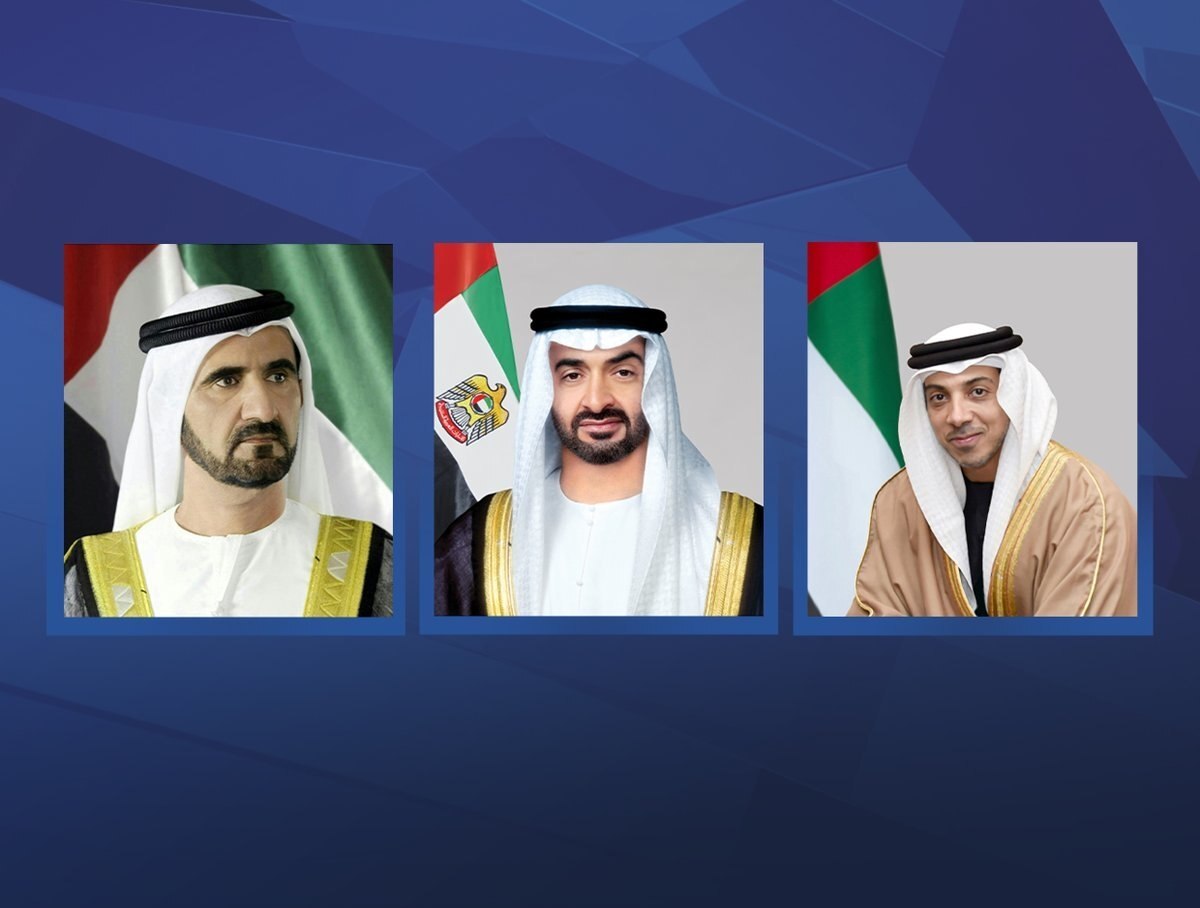
UAE leaders congratulate President of Kazakhstan on Republic Day
President His Highness Sheikh Mohamed bin Zayed Al Nahyan has sent a message of congratulations to President Kassym-Jomart Tokayev of Kazakhstan on the occasion of his country's Republic Day.
View Details
UAE Expresses Solidarity with the Philippines and Conveys Condolences over Victims of Two Military Aircraft Crashes
The United Arab Emirates has expressed its solidarity with the Republic of the Philippines following the crash of two Philippine Air Force aircraft during a training mission at an air base in Batangas province, south of the capital, Manila, which resulted in the deaths of four pilots.
View Details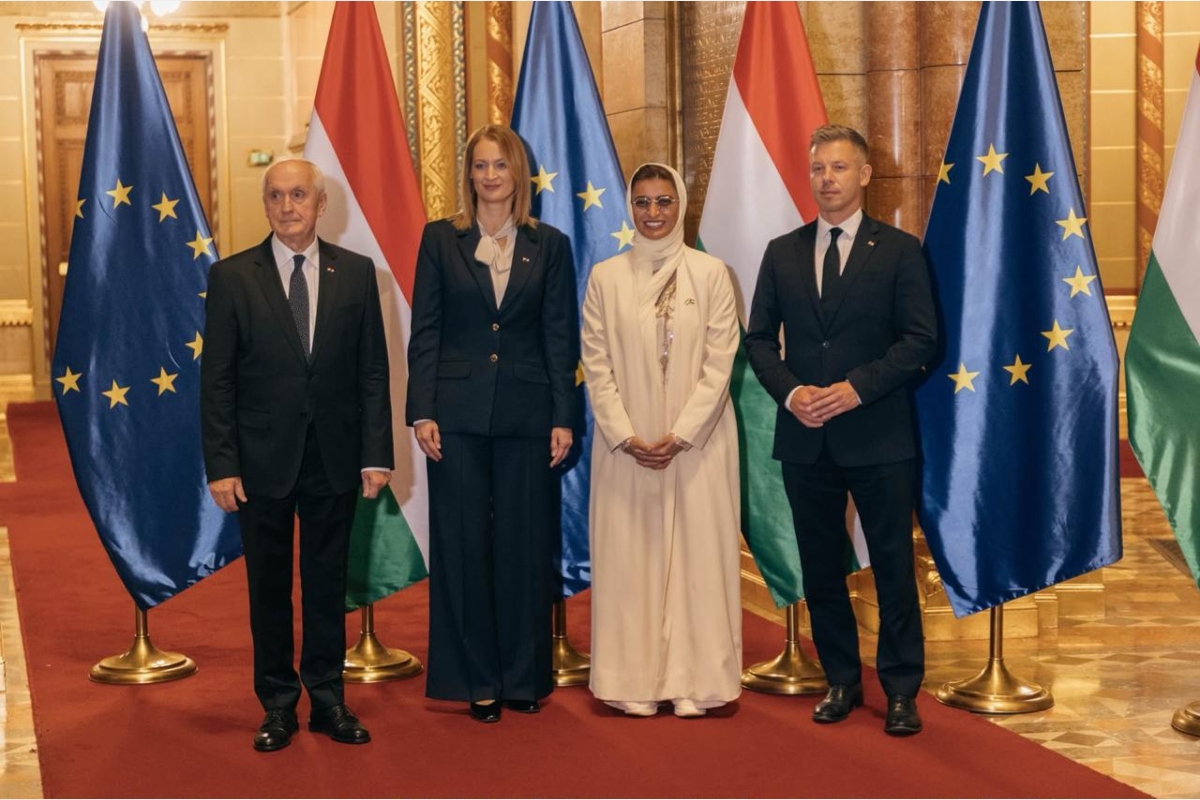
On Behalf of the UAE President, Noura Al Kaabi Attends Commemoration of 70th Anniversary of 1956 Hungarian Revolution
On behalf of His Highness Sheikh Mohamed bin Zayed Al Nahyan, UAE President, Her Excellency Noura bint Mohamed Al Kaabi, Minister of State, attended the official commemoration of the 70th anniversary of the 1956 Hungarian Revolution and Freedom Fight, which was held in Hungary’s capital, Budapest.
View Details
UAE Strongly Condemns Houthi Group’s Attempt to Target Several Areas in Saudi Arabia
The United Arab Emirates has condemned in the strongest terms the Houthi group’s attempt to target several areas in the Kingdom of Saudi Arabia using ballistic missiles.
View Details