UAE and Quartet to present their case to ICAO following ICJ procedural decision
The International Court of Justice (ICJ) today held that the Council of the International Civil Aviation Organisation (ICAO) has jurisdiction to address Qatar’s civil aviation allegations against the United Arab Emirates (UAE) and others. The UAE announced that it will now put its legal case to ICAO supporting the right to close its airspace to Qatari aircraft.
“The ICJ’s decision was technical and limited to procedural issues and jurisdiction to address the dispute; it did not consider the merits of the case,” said HE Dr. Hissa Abdullah Al Otaiba, UAE Ambassador to the Netherlands. “We have the highest respect for the Court and will be looking at its decision closely. There are important points in the judgement that the UAE and Quartet will rely on in proceedings before the ICAO Council. We note that other important questions have been left unanswered by the judgement; issues that we will address in front of the ICAO Council.
“We look forward to explaining to the ICAO Council that the UAE restricted Qatari planes from UAE airspace as one of a number of measures flowing from the termination of relations by ten states, including the UAE,’’ HE Al Otaiba said. “This was in response to Qatar’s longstanding support for terrorist and extremist groups and its active steps to promote unrest in the region. The UAE believes that the Council will not attempt to second-guess the national security decisions of ICAO member states. In the meantime, the UAE’s airspace measures remain in effect.
“This crisis will not be resolved in ICAO or in any other international organization. Relations will only improve when Qatar implements the Riyadh Agreements and is willing to demonstrate that it will play a constructive role in the region.”
ENDS
Background:
ICAO is a specialized agency of the United Nations charged with ensuring the safety of international non-military aviation and establishing routes and technical standards. In 2017, Qatar asked ICAO’s governing body, the Council, to review on an emergency basis the decisions by Bahrain, Egypt, Saudi Arabia, and the UAE to close their airspace to Qatar aircraft. ICAO declined to do so. Qatar subsequently sought ICAO action under the agency’s regular procedures. Bahrain, Egypt, Saudi Arabia, and the UAE then moved to dismiss those proceedings, citing procedural irregularities by Qatar and lack of jurisdiction. The ICAO Council decided not to dismiss the case, and the UAE and the other responding parties appealed that jurisdictional decision to the ICJ, which today held that ICAO can review the situation. The ICAO Council has not yet commenced its review of the merits of the case, which was stayed pending a ruling by the Court on the procedural issues.
The measures at issue in this dispute arose on 5 June 2017, when the UAE, Bahrain, Egypt, and Saudi Arabia (the Four States), and six other states, terminated relations with Qatar because of Qatar’s support for terrorism and extremism, its intervention in others’ internal affairs, and its promulgation of hate speech through Al Jazeera Arabic and other Qatari state media. Each of the Four States closed airspace to Qatar as part of a broad basket of measures relating to the termination of relations.
The Four States acted to protect their citizens and ICAO rules allow member nations to take action in the face of emergencies, including security risks. For years, Qatar has supported groups such as Al Qaeda, Al Islah, the Al-Nusra Front, the Muslim Brotherhood, and others. Qatar also has used its vast state media to give a voice to such groups and to foment unrest and promote intolerance. The Four States repeatedly put Qatar on notice that its conduct is unacceptable and in violation of its international obligations.
Qatar is a signatory or subject to UN treaties and resolutions banning terror financing and hate speech. While Qatar agreed in a number of regional treaties, known collectively as the Riyadh Agreements, to stop this conduct, it has persisted. The Four States have said that they would engage in dialogue and resume relations with Qatar if it agrees to halt these practices, but Qatar has refused to relent.
Until then, the Four States will continue to exercise their sovereign right to cut ties with and close their airspace to Qatar and to work with ICAO to ensure the safety of aviation in the region.
Related News
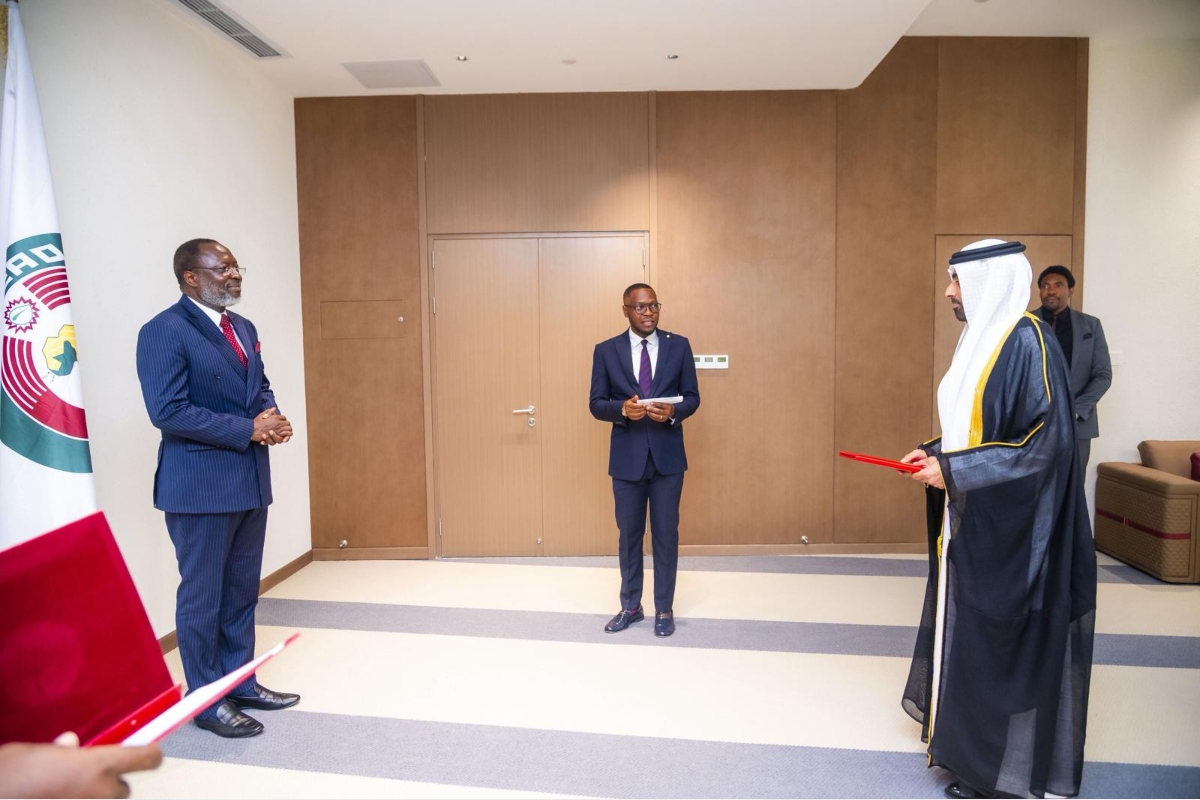
Ambassador Salem AlShamsi Presents Credentials as Permanent Representative of the UAE to ECOWAS
His Excellency Salem Saeed AlShamsi, Ambassador of the United Arab Emirates to the Federal Republic of Nigeria, presented his credentials to His Excellency Dr. Omar Alieu Touray, President of the Commission of the Economic Community of West African States (ECOWAS), as Permanent Representative of the United Arab Emirates to the organization.
View Details
H.E. Saeed bin Mubarak Al Hajeri receives credentials copy from Ambassador of the Republic of Korea to the UAE
H.E. Saeed bin Mubarak Al Hajeri, Minister of State, received a copy of the credentials of H.E. Lee Won-ik, Ambassador Extraordinary and Plenipotentiary of the brotherly Republic of Korea to the United Arab Emirates.
View Details
UAE Welcomes Joint Statement on Sudan
The UAE welcomed the joint statement on Sudan, which reaffirmed the shared commitment to supporting a peaceful, democratic, and stable path forward in line with the aspirations of the brotherly Sudanese people.
View Details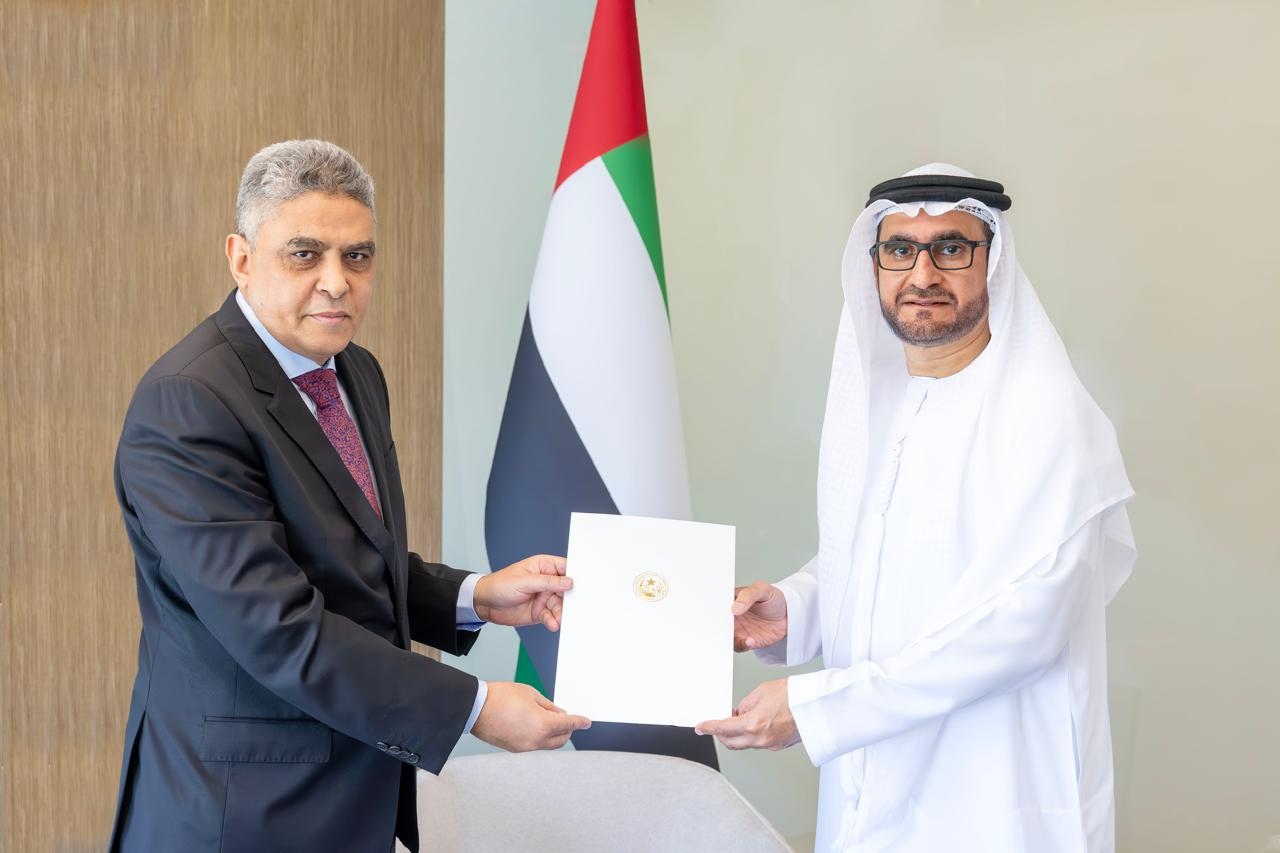
MoFA receives credentials copy from the Ambassador of the Islamic Republic of Mauritania to the UAE
H.E. Omar Obaid Alhesan Alshamsi, Undersecretary of the Ministry of Foreign Affairs, received a copy of the credentials H.E. Abdallahi Bah Nagi Kebd, Ambassador Extraordinary and Plenipotentiary of the Islamic Republic of Mauritania to the UAE.
View Details