

H.E. Al Hashimy underscored the gravity of the ongoing regional situation, highlighting that since 28 February, the UAE has been targeted by Iranian terrorist and unprovoked attacks, which included more than 2,500 ballistic and cruise missiles, as well as drone attacks. The attacks mostly targeted civilian infrastructure, despite the UAE not being a party to the war and having made extensive efforts in recent months to prevent this escalation .
Her Excellency reaffirmed that the unprovoked Iranian attacks against commercial vessels in the Arabian Gulf and the Strait of Hormuz represent economic warfare and piracy, and constitute a flagrant violation of countries’ sovereignty and territorial integrity. Moreover, these attacks pose grave economic, humanitarian, and environmental risks to vital passages. The UAE reiterated that any attempt to close or obstruct navigation, or use the Strait as a tool of economic coercion is wholly unacceptable, lacks legal grounds, and represents a direct threat to the international freedom of navigation, the safety of seafarers, the global economy, and energy security.
Her Excellency warned that the obstruction of navigation in the Strait of Hormuz has resulted in decreased ship transits, posing grave risks to global energy markets, to the maritime transport sector, and international supply chains. Her Excellency stressed that the Strait of Hormuz is one of the world’s most important strategic maritime passages, through which various goods and essential commodities pass. The Gulf supplies approximately 25 percent of natural gas production, 20 percent of global oil, and 70 percent of the world’s petrochemical needs. Moreover, 33 percent of global fertilizer is exported from Gulf countries. Therefore, any threat to the Strait or disruption in supplies directly jeopardizes global food security, at a time when millions of people worldwide face increasing risks of food shortages.
Her Excellency emphasized that the consequences of navigation disruptions will not be limited to developing and vulnerable countries. Many developed countries rely on critical materials transported through the Strait, placing the entire world at risk.
Her Excellency reaffirmed the UAE’s support for international efforts to safeguard the freedom of navigation, including the UN Security Council Resolution 2817 and the IMO Council’s decision. In this regard, Her Excellency welcomed the Kingdom of Bahrain’s draft resolution presented to the UN Security Council, noting the UAE’s strong support for this initiative aimed at reinforcing maritime security in the Strait of Hormuz. Her Excellency further underscored that the Strait of Hormuz is an international waterway and cannot be subject to unilateral restrictions or conditions imposed by any single country.
H.E. Al Hashimy reiterated the UAE’s demand that Iran immediately cease its terrorist and brutal threats and attacks, comply with its obligations under international law, respect freedom of navigation, and ensure safe passage for commercial ships.
Her Excellency stressed the need for a conclusive and comprehensive outcome that addresses Iran’s full range of threats, including: nuclear capabilities, missiles, drones, terror proxies, and blockades of international sea lanes.
Related News
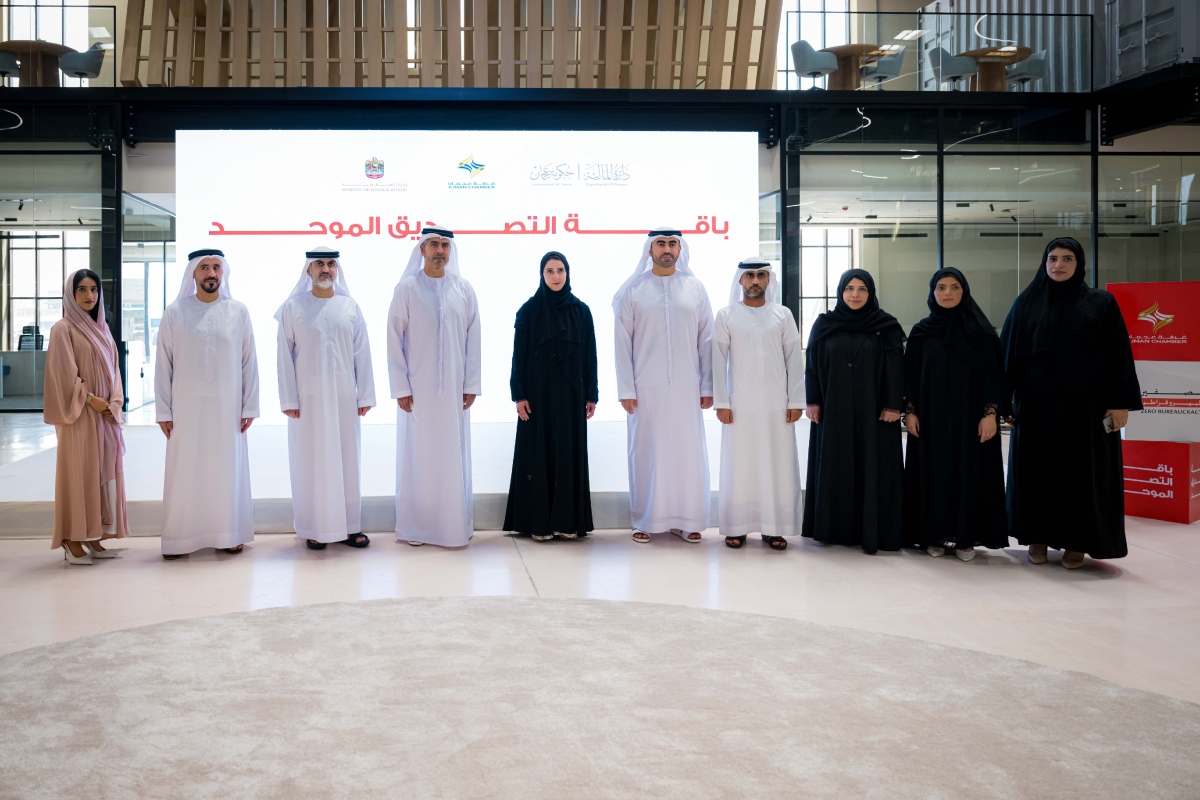
MoFA, Ajman Chamber, and Ajman Department of Finance Activate Unified Attestation Package
The Ministry of Foreign Affairs (MoFA), Ajman Chamber, and the Ajman Department of Finance have activated the Unified Attestation Package, streamlining the issuance and attestation of documents issued by Ajman Chamber through an integrated process.
View Details
137 members participate in High-Level Week.. UAE Delegation Concludes Participation in 81st Session of UN General Assembly
The United Arab Emirates’ delegation, led by His Highness Sheikh Abdullah bin Zayed Al Nahyan, Deputy Prime Minister and Minister of Foreign Affairs, concluded its participation in the High-Level Week of the 81st Session of the United Nations General Assembly (UNGA).
View Details
UAE Following Incident Involving flydubai Flight to Tel Aviv
The United Arab Emirates is closely following the incident involving flydubai flight FZ1073 from Dubai International Airport to Tel Aviv, which was diverted and landed safely at Tabuk Airport in the Kingdom of Saudi Arabia.
View Details
UAE Condemns Killing of Oil Tanker Crew Members
The United Arab Emirates has condemned the killing and wounding of crew members of the hijacked oil products tanker MT Honour 25 off the coast of Somalia.
View Details