United Arab Emirates and Montenegro have formally established diplomatic relations between the two countries on April 4, 2008. Montenegro opened an Embassy in Abu Dhabi in January 2010, while the UAE opened an Embassy in Podgorica, the first in the Western Balkans region, later that year - October 2010.
Two countries develop bilateral relations in the spirit of friendship, trust, solidarity and understanding as witnessed by signing of numerous bilateral agreements.
Agreements signed between UAE and Montenegro:
- Agreement on Air Services (The Air Service Agreement between the Government of UAE and Government of Montenegro)
- Agreement on Double Taxation Avoidance (Convention between Montenegro and UAE for the Avoidance of Double Taxation With Respect to Taxes on Income and Capital
- Agreement on Economic Cooperation between the Government of UAE and Government of Montenegro
- Protocol on the Joint Economic Committee
- Agreement on Investment Protection (Agreement between the Government of UAE and Government of Montenegro on the Promotion and Reciprocal Protection of Investments)
- Agreement on Visa Exemption for Holders of Diplomatic and Service Passports
- Loan Agreement between ADFD (Abu Dhabi Fund for Development) and Fund for Development of Montenegro (Loan Agreement between Abu Dhabi Fund for Development and Fund for Development of Montenegro to Finance Support of Agricultural Sector)
- Memorandum of Understanding on Political Consultation Between the Ministry of Foreign Affairs of UAE and Ministry of Foreign Affairs and European Integration of Montenegro
- Memorandum of Understanding Concerning Cooperation in the Field of Higher Education and Scientific Research (Memorandum of Understanding Concerning Cooperation in the Field of Higher Education and Scientific Research between the Ministry of Science and Education of Montenegro and Ministry of Education of the UAE)
- Protocol on Amendments to the Agreement between the Government of UAE and the Government of Montenegro on Mutual Exemption of Entry Visas for Holders of Diplomatic and Special Service Passports.
- Memorandum of Understanding between the Cyber Security Council of the United Arab Emirates and the Ministry of Public Administration of Montenegro
General Laws:
- During his/her movement, stay and work in Montenegro, a foreign person shall be obliged to act in accordance with the regulations applicable in Montenegro and decisions of the competent state authorities.
- Foreign citizen means any citizen of another state or a stateless person.
- A stateless person is a foreigner whom no nation consider its citizen in accordance with its legislation.
- A foreigner is entitled to the protection of personal data that are processed upon him/her, in accordance with the law governing the protection of personal data. This law does not apply to a foreigner who exercises the privileges and immunities under the international law, if not otherwise stipulated by this law. For stateless persons, the provisions of ratified and published international treaties and generally recognized.
- A foreigner shall be restricted or prohibited the movement in a particular area in Montenegro if thus required due to the reasons of national security, public order or public health, in accordance with the law.
- A foreigner holding multiple citizenships is considered to be a citizen of a state that issued the passport with which he/she entered Montenegro.
- The foreigner referred to in paragraph 1 of this Article shall be obliged to use the passport with which he/she entered Montenegro during his/her stay in Montenegro.
A foreign person shall not be permitted to enter Montenegro, if:
- He/she uses another person’s, invalid, i.e. false passport or other document;
- If required by reasons of national security, public order and public health;
- He/she is in transit across the territory of Montenegro and fails to satisfy requirements for entry into a third country.
- A pronounced measure of expulsion is in force, or a security measure of deportation of a foreign citizen from the state.
- He/she has insufficient financial resources to support himself/herself during stay in Montenegro and to return to his/her country of origin or to travel to a third country.
Economic indicators of Montenegro for the period 2015- 2017
|
2017 |
2015 |
2016 |
Year |
|
1.694 |
3.954 |
3.655 |
GDP (mil) |
|
4,2 |
2,9 |
3,4 |
Real GDP growth (%) |
|
2,8 |
0,9 |
1,4 |
Inflation (%) end of period |
|
15,1 |
18,0 |
17,8 |
Unemployment rate (%) (LFS) |
|
--- |
2.546,05 |
2.418,83 |
Public debt (mil) |
|
--- |
64,39 |
66,18 |
Public debt (% of GDP) |
|
249.8 |
371.6 |
619,3 |
Net foreign direct investment (mil.) |
|
14,7 |
9,4 |
17,1 |
Net foreign direct investment (% of GDP) |
|
---- |
51 |
46 |
Doing Business |
|
83 |
65 |
66 |
Economic Freedom – Heritage Foundation |
|
--- |
64 |
61 |
Transparency International |
|
85 |
59 |
62 |
Economic Freedom of the World –Fraser Institute |
|
77 |
82 |
70 |
Global Competitiveness Index – WEF |
Culturally, Montenegro belongs to the Mediterranean and partly to the Pannonian-Danube heritage. Accordingly, it has been exposed to a strong influence of the Mediterranean, the Central and East European civilization and culture.The life styles and culture of all ethnic groups in Montenegro are best illustrated in its museums, which house over 12 000 artefacts.
Montenegrins have accumulated a rich cultural and historical heritage, which dates from the pre-Romanesque, Gothic and Baroque periods. The Montenegrin coastal region is especially known for its cultural monuments, such as the Cathedral of St. Tryphun; the basilica of St. Luke (over 800 years); Our Lady of the Rock (Shkrpjelo); and others.
The Byzantine influence in architecture and in the monastery paintings is especially felt in continental part of Montenegro. Montenegrin medieval monasteries are decorated with frescos on their walls. A big number of religious monuments are also well preserved. The monasteries of Morača, Piva, Sveta Trojica (Holy Trinity), Đurđevistupovi, Savina, CetinjeMonastery and Ostrog – attract people from around the world with their exceptional spiritual power and the unique ambiance. Additionally, the Cetinje monastery houses several holy relics that are of great significance to the local Orthodox community, including the right hand of St. John the Baptist, which was used to baptize Jesus in the River Jordan, and pieces of the cross on which Jesus was crucified. Among the remarkable treasures on display are ancient handwritten manuscripts, exquisite icons such as the enchanting Syrian Madonna and Child, and a copy of the 1494 Oktoih (Book of the Eight Voices).
Other significant monuments include King Nikola’s Palace in Cetinje, Church of Our Lady of the Rocks and Church of St. Maria in Punta.
The first literary works written in this region are ten centuries old, and the first Montenegrin book was printed five hundred years ago. The first state-owned printing press was located in Cetinje in 1494, where the first South Slavic book was printed the same year (Oktoih). Ancient manuscripts, dating from the 13th century, are kept in the Montenegrin monasteries.
The national capital Cetinje is the centre of the culture and art in Montenegro, whereas the administrative and centre of education is Podgorica.
Montenegro's traditional culture revolves around clans/tribes, groups of patrilineal related families that at one time maintained tribal identities on their own traditional territories.The clans still remain an important element in Montenegrin social life. Despite a relatively small population, Montenegro has developed a wide range of cultural institutions. These include theatres, art galleries, museums, and libraries.
Montenegro has emphasized physical education and sports activities. Fishing and hunting are popular. The state also has set aside substantial areas for recreation, including five national parks: Durmitor, Biogradska Gora, Skadar Lake, Lovcen and Prokletije. The areas of the national parks cover 7.7% of the territory of Montenegro. Each national park is characterized by a specific natural and cultural heritage.
Since 1977 Tara River have the status of the Biosphere Reserve (MAB). Only few years later, in 1980, the Durmitor National Park with the Tara River Canyon, is located on the UNESCO World Heritage List.The Skadar Lake National Park has the status of a significant ornithological area (IBA) since 1989, and in 1995 it was registered to the World Wetlands of International Importance (RAMSAR).
Examples of mesmerizing beauty can be found in most of the Montenegrin cities along the coast. The highest concentration of artistic and cultural wealth was recognized in Kotor Bay, so the town of Kotor was included in the UNESCO list of cultural heritage.
There is a long history of arts including painting, sculpture and poetry, and film. The country’s turbulent history has largely contributed to the famous epic poetry which is closely connected to another significant element of the Montenegro culture - Gusle - a stringed musical instrument originating from Montenegro.
Montenegrin art in all its forms can be found in museums across the country. From literature to sculpture and painting, there’s a lot to be discovered. Capital city Podgorica is home to The Montenegrin National Theatre.
The country media landscape is diversified with RTCG national broadcaster as most influential, and numerous other local (Vijesti) and regional televisions and radio channels. Most relevant newspapers in the country are “Vijesti”, “Pobjeda”, “Dan”, and the independent weekly “Monitor”. Local presses publish some 250 books each year.

This interactive page provides Emirati travelers with personalized travel guidance and essential entry requirements based on their selected destination. Through a user-friendly map interface, travelers can quickly access important information, understand destination-specific regulations and requirements, and prepare confidently for their international journey.
- View destination-specific visa and entry requirements.
- Access the latest travel guidance and important alerts.
- Review passport, health, and required documentation requirements.
- Prepare for international travel using reliable and relevant guidance.
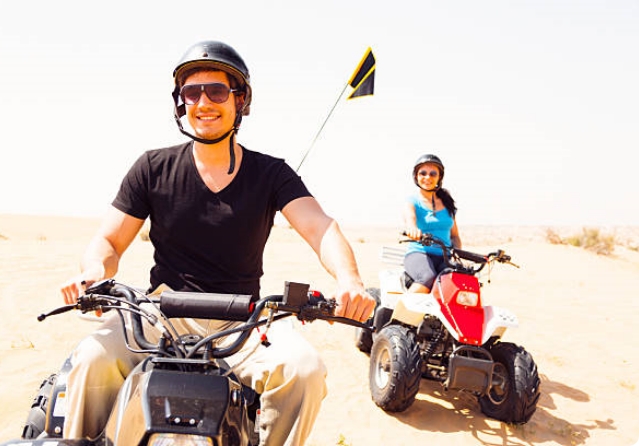
This interactive page provides non-UAE citizens with clear and accessible information about visa requirements for entering the United Arab Emirates. Users can search for their country or nationality and quickly determine whether they are eligible for visa-free entry or are required to obtain a visa before travelling, helping them plan their visit and complete the necessary arrangements in advance.
- Search for visa information by country or nationality.
- Check whether entry to the UAE is visa-free or requires a visa.
- View country-specific visa eligibility information.
- Prepare the required travel and visa arrangements before departure.